


Batch 13
Chief Digital and AI Officer (CDAIO) Programme
Spearhead AI-enabled transformation for real-world business impact
- Masterclasses and Industry Sessions by Experts
- 1-Day Campus Immersion
- Triple-Crown Accredited B-School
- ISB Executive Alumni Status
- Network with Fellow CXOs and Industry and Academic Experts
Early Enrolment Benefit
This Republic Day, embrace new opportunities to learn and grow by acquiring essential skills.
Enrol before Invalid liquid data to avail 5% enrolment benefit. Take the first step towards growth, today | Application Fees:Invalid liquid data
Programme Overview
In an era where digital and AI transformation is reshaping industries, the role of Chief Digital and AI Officers is critical. ISB Executive Education’s Chief Digital and AI Officer (CDAIO) Programme is a 30-week journey designed by the #1 B-School in India*. It is meticulously designed to address the growing demand for strategic senior leaders, with more than 10 years of professional experience, who can navigate digital innovations to drive business success. This programme equips participants with the necessary skills and knowledge to become visionary leaders in the digital and AI landscape. Upon successful completion of the programme, participants will receive a Chief Digital and AI Officer (CDAIO) Certificate from ISB Executive Education, affirming their expertise and readiness to lead digital and AI initiatives.
Source: Global MBA Ranking 2025
Why ISB Executive Education?
#1
#27
#19
#4
Programme Highlights

160+ Pre-recorded video lectures* for self-paced learning from renowned ISB faculty

2-3 Live sessions by ISB faculty

8 Masterclasses by industry experts

4+ Case studies like Apollo 13 and Nestlé

1 Capstone project

15+ Networking office hours

1-Day campus immersion at ISB
Note:
*This is a self-paced online programme with 2-3 Live sessions by ISB faculty and masterclasses by industry experts. We have a curated panel of eminent industry practitioners who will be conducting the weekly live doubt-clearing sessions.
**Assignments are graded either by industry practitioners who are available to support participants in their learning journey and/or by the Emeritus grading team. The final number of quizzes, assignments and discussions will be confirmed closer to the programme start.
Live Webinar with ISB faculty's recordings may or may not be made available, at the discretion of faculty members. Emeritus or the institute does not guarantee availability of any session recordings.
Office hours are weekly live connects with the Programme Leader/Success Coach for query resolution.
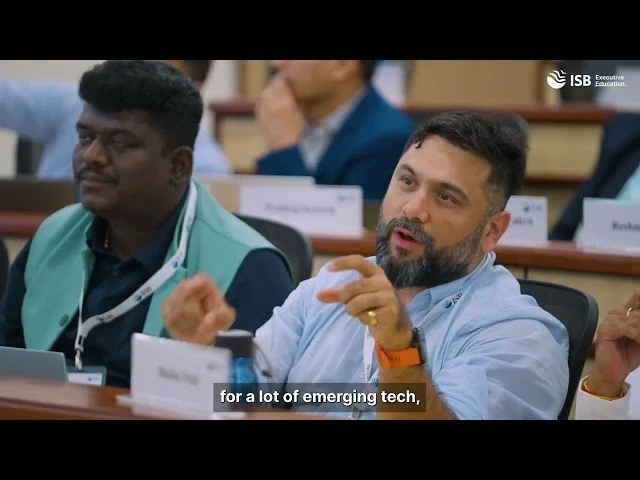
Campus Immersion
Case Studies










Note:
All product and company names are trademarks or registered trademarks of their respective holders. Use of them does not imply any affiliation with or endorsement by them.
Gain the ISB Executive Alumni Status
Access to the Executive Alumni portal – a unique space for alumni to re-ignite connections, spark collaborations and engage in continuous learning. The alumni portal has several features like an alumni directory, city chapters, special interest groups, alumni mentorship and more. Access to the alumni portal is provided post the programme completion.
Networking opportunities via ISB Executive Education Network Group on LinkedIn.
Preferential pricing with 10% discount on programme fee on ISB Executive Education programmes.
ISB Executive Education newsletters, articles, podcasts and videos.
Access to ISB Executive Education support team over email.
Exclusive invitations to Online and Offline events like Webinars, Conferences, and Master Classes, amongst others.
Opportunity to be a Guest Speaker at ISB Executive events (invited on the discretion of ISB Executive Education).
ISB Executive Alumni Credentials: ISB Email ID.
Note:
All activities and research resources for ISB Executive Education alumni are handled by ISB Executive Education. Whenever there are any events or webinars held, they will be informing the alumni community of the same. Events take place yearly basis availability of resources & is subject to change.
All alumni benefits are subject to change based on ISB’s prevailing alumni benefits policy. The school reserves the right to modify or withdraw any benefit at its discretion without prior notice.
Who is this Programme for?
Senior Professionals at CXO Levels:
Chief Digital Officer | Chief Information Officer | Chief Transformation Officer | Chief Information Security Officer Head Digital Transformation | Vice President Digital Transformation |Head of Strategy | Vertical Head – Digital Strategy/ Product Strategy/ Digital/IT/Technology
Mid to Senior Professionals at pre-CXO Levels:
Digital Transformation Manager |Senior Product Manager | Digital Transformation Leader | Deputy General Manager | General Manager | Associate Vice President | Consultant | Senior Consultant
Relevant Key Industries:
IT, E-commerce, Banking and Finance, FMCG, Media, Retail and Healthcare
Past Participant Profile
Work Experience
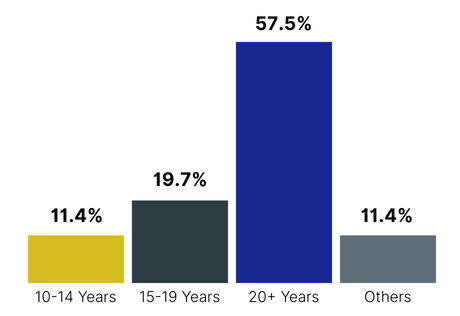
Top Industries
IT/Computers
Banking
Financial Services
Technology/Telecom
Others
*Other industries include Health Care/Health Services, Manufacturing, Insurance and Consumer Products/Retail
*Based on past participant data
Programme Outcomes

Develop and execute digital strategies aligned with organisational goals, leveraging AI technologies for innovation and growth, while guiding successful adoption through change management.

Foster digital innovation by promoting cross-functional collaboration, empowering teams, and championing transformation initiatives.

Drive stakeholder alignment and overcome resistance through effective communication and ensuring seamless AI integration to achieve transformation goals.

Establish AI governance and risk management processes to safeguard digital assets, ensure ethical compliance, and advise on cybersecurity measures in an evolving digital landscape.

Transform processes by strategically implementing AI technologies, while fostering continuous learning to enhance digital readiness, and evaluating the impact of disruptive forces.
Participant Testimonials






Cutting-edge Masterclasses

Leading Emerging Technologies Industry 4.0, Social 4.0, Cloud and Big Data

AI Transformation Playbook for CDO

AI Applications Deep-Dive: Sectoral Perspectives for CDO

Design Thinking, Digital Customer Journey and Empathy Driven Innovation

Building Cyber Resilience and Data Governance in a Digital Era as CDO

Applications of AI to Transform Supply Chain Business Function
Programme Modules
Module 1: Role of a Chief Digital Officer (CDO)
Understand the role of a Chief Digital Officer (CDO)
Understand the CDO's impact on digital strategy
Build digital culture and capability
Learn new ways of working: Lean start-up
Module 2: Digitalisation landscape and the impact of disruption
Understand digital transformation journey
Embrace innovation in the digital era
Build an agile and resilient culture
Manage digital disruption
Module 3: Building a customer-centric organisation in the digital era
Understand customer-centric strategies
Leverage data for personalisation
Enable omnichannel experience design
Drive customer-centric culture
Module 4: Leading emerging technologies
Enable scalable and cost-efficient transformation using Cloud Computing
Enhance decision-making and operational efficiency using Big Data
Transform business operations using Internet of Things (IoT) technologies
Understand Blockchain technology and its applications in industries
Execute the right mix of emerging technologies aligned with organisational goals
Module 5: Continuous innovation with AI
Harness AI to benefit businesses and enable disruption
Leverage frameworks to develop strategies using AI
Embibe the 'Technology Matrix'
Evaluate the preparedness of a company for AI adoption and deployment
Outline the framework for monetisation of data and AI
Understand impact of adoption of Low and No-Code Platforms
Module 6: Managerial understanding of ML and AI algorithms
Learn non-technical introduction to AI algorithms
Appreciate AI across managerial functions
Understand AI as a general purpose technology and its implications
Explore the managerial trade-offs involved while embracing AI
Module 7: Business models for AI-led business
Outline the framework for integrating value creation in business innovation
Learn 'Business Innovation and Organisational Transformation' framework
Enhance organisation's performance using data driven business innovation
Learn the use of AI, analytics and cloud in driving market value for a company
Module 8: Generative AI business applications
Explore Generative AI tools and their business applications
Appreciate Generative AI APIs used by companies
Explore functional applications of GenAI
Understand the organisational advantage of using GenAI
Module 9: Digitalising supply chain and applications of AI in supply chain transformation
Understand digital supply chain and supply chain transformation
Drive AI-driven supply chain planning and optimisation
Leverage Robotics and Automation in supply chain
Module 10: Strategies and new business models for the platform economy
Learn growth strategies for platforms
Understand value creation in the platform economy
Leverage business model innovation
Learn multi-sided markets / Two-sided markets
Module 11: Digitalising core functions
Identify core functions suitable for digitalisation
Analyse the impact of digitalisation on core functions
Digital tools and technologies for core function digitalisation
Data-driven decision-making in core functions
Overcome challenges and manage risks in digitalisation
Module 12: Technology investments
Business motivations for designing information capabilities
Types of operating models that drive the architecture of information capabilities
Analyse the technology investments
Assess the strategic and financial value of the technology investments
Module 13: Fostering innovation to address digital disruption
General business strategies and the division of labour between shareholders
Learn how to compare disruptive and sustaining technologies
Evaluate digital-first use cases from legacy businesses
Analyse structural levers for capital management and variable risk profiles
Understand the management of portfolios with approaches and metrics
Understand the four types of corporate entrepreneurship
Module 14: Design thinking and digital customer journey for CDO
Apply design thinking principles and foster empathy-driven innovation
Utilise design thinking methodologies to develop innovative digital solutions
Strategies for optimising the digital customer journey
Impact of design thinking on key business metrics
Module 15: Digital product management
Agile product development
Product discovery and road mapping
Product metrics and analytics
Pricing
Module 16 : Data Governance and Cyber Resilience
Strategic implications of building cyber resilience as a digital leader
Data governance frameworks, data privacy and compliance
Cybersecurity risk management as a CDO
Module 17: Responsible AI
Recognise the ethics, privacy, and regulations in AI and ML
How to govern for AI bias and fairness
Transparency and explainability
Module 18: Leadership in the age of AI
Opportunities for humans augmenting machines
Describe AI value creation by business problem and function
Discuss the leadership issues around the future evolution of AI
Change mindsets and culture for enabling AI-enabled change
Change management plan for an organisation to become AI-enabled
Design and implement AI-enabled change in the organisation
Module 19: Introduction to digital leadership
Working at C-suite level
Future of work
Leadership challenges of digital transformation
Strategic thinking skills for effective decision making
Module 20: Aligning and influencing key stakeholders
Core changes of championing DT
Successful digital transformation strategy
Mindset to influence key stakeholders
Stakeholder commitment analysis
Leader’s role in creating psychological safety
Module 21: Effective communication and energising actions and new behaviours
Change management and workforce transformation
Working across stakeholders
Digital Culture
Governance and program management
SCARF model
Module 22: Organising for digital transformation
Models of organisation design to enhance digital readiness
Entrepreneurial mindset of DT
Effective execution of digital strategy
1-day Campus Immersion at ISB

Industry Session by Experts

On-campus Session

Networking Session
Key Programme Faculty
Novartis Professor, Marketing Strategy and Innovation, ISB
Rajendra Srivastava is the Former Dean of the Indian School of Business (ISB) and the Novartis Professor of Marketing Strategy and Innovation. He comes with an experience of o...

Professor, Information Systems, Deputy Dean of Academic Programmes & Digital Learning, ISB
Deepa Mani is the Professor of Information Systems and the Deputy Dean of Academic Programmes & Digital Learning at the Indian School of Business. Deepa’s research interests a...
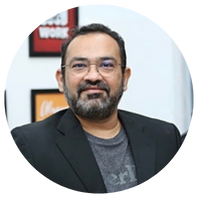
Associate Professor, Strategy, Executive Director - SRITNE, Associate Dean - Centre for Learning and Teaching Excellence, ISB
Anand Nandkumar is an Associate Professor of Strategy, Executive Director for SRITNE at ISB, and Associate Dean - Centre for Learning and Teaching Excellence. He explores indu...

Assistant Professor, Information Systems, ISB
Sumeet Kumar is an Assistant Professor at the Indian School of Business (ISB), Hyderabad. He studies problems at the intersection of technology and society. He is interested i...

Clinical Assistant Professor (Teaching), Information Systems, Academic Director (The LAB), ISB
Vishal Karungulam is a Clinical Assistant Professor (Teaching) at the Indian School of Business – where he teaches courses on Software Product Management, Digital Innovation, ...

Professor, Organisational Behavior (Practice), ISB
Professor Ramnarayan has been a Professor at the Indian Institute of Management, Ahmedabad, Visiting Faculty at the Case Western Reserve University, Cleveland, Ohio and a Gues...
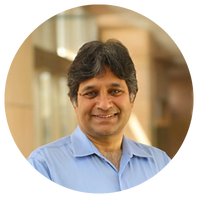
Professor, Organisational Behavior (Practice), ISB
Unique combination of expertise in B-school professorship, Fortune 500 strategy consulting, C-level executive experience, Silicon Valley and Bangalore-based entrepreneurship, ...
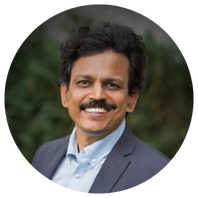
Visiting Faculty, ISB
Before joining IIM Visakhapatnam, he worked as a Professor at the School of Management Studies, University of Hyderabad. He has worked earlier as faculty at IIM Bangalore, RMI...

Visiting Faculty, Marketing, ISB
Ashish Sinha, Visiting Professor of Marketing & Research Fellow at the Indian School of Business and Professor of Marketing at UQ Business School. He has previously held senio...

Visiting Faculty, ISB
Dr. Rohini Srivathsa is the Chief Technology Officer at Microsoft India & South Asia, where she is focused on helping customers and partners in India & South Asia accelerate t...
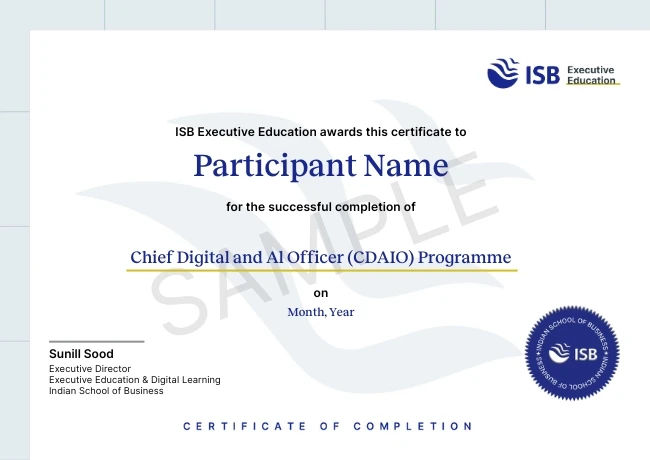
Programme Certificate
To successfully complete the programme and receive a digital certificate of completion by ISB Executive Education, you must score at least 70% in the required assignments and complete the capstone project scoring minimum of 70%.
Note: - All certificate images are for illustrative purposes only and may be subject to change at the discretion of ISB Executive Education.
Programme FAQs
The Chief Digital and AI Officer (CDAIO) roles and responsibilities encompass leading an organisation’s digital transformation efforts. This includes developing and executing strategies that align digital initiatives with business goals, overseeing the adoption of new technologies, and ensuring that the organisation remains competitive in the digital space.
To excel in this field, the Chief Digital and AI Officer (CDAIO) qualifications typically include a strong background in digital technologies, business management, and leadership. A deep understanding of emerging technologies, data analytics, digital marketing and AI is also recommended.
This CDAIO programme provides artificial intelligence training and is crucial for honing the skills required to drive digital transformation. This includes learning about the latest digital tools, strategies for managing digital teams, and ways to integrate digital initiatives into broader business strategies.
While both roles focus on digital strategy, a Chief Digital Information Officer often have a more technical focus, overseeing the IT infrastructure and ensuring that digital information systems support the organisation’s strategic goals. In contrast, a Chief Digital and AI Officer (CDAIO) is typically more involved in overarching digital strategy and business transformation.
The Chief Digital and AI Officer skills include leadership, strategic thinking, and a deep understanding of digital technologies. CDAIOs must also excel in change management, data analytics, AI and digital marketing to effectively guide their organisations through digital transformations.
The ISB Executive Education CDAIO programme is designed to equip senior leaders, with over 10 years of professional experience, the skills and knowledge necessary to lead digital transformation efforts. Participants will gain insights into the latest digital trends, strategies for implementing digital initiatives, and how to align these with business goals to drive organisational success. The programme is designed for senior professionals who are either currently in or aspiring to move into the Chief Digital and AI Officer role, ensuring a cohort of high-caliber participants.
Yes, this Chief Digital and AI Officer (CDAIO) Programme offers Executive Alumni status. Additionally, you also get access to the Executive Alumni portal – a unique space for alumni to re-ignite connections, spark collaborations and engage in continuous learning.
Upon successful completion of the CDAIO programme, participants will receive a digital certificate from the Indian School of Business (ISB) Executive Education, recognising their advanced skills and knowledge in digital transformation and leadership.
The fees for this CDAIO programme are structured to reflect the value and comprehensive nature of the programme. Various payment options are available, including one-time payments and installment plans, to accommodate different financial needs. For detailed information on the fees and payment options, prospective participants can fill in the inquiry form on this page or connect with our programme advisors for more information.
Programme Fees: INR 6,31,000 + GST Flexible payment options and student loans available
Early registrations are encouraged. Join now.
Flexible payment options available.
Starts On